Cover Letter and Outreach · Published July 6, 2026
The best interview thank-you email proves you listened. It does not repeat your pitch, pressure the timeline, or disguise a second cover letter as gratitude.
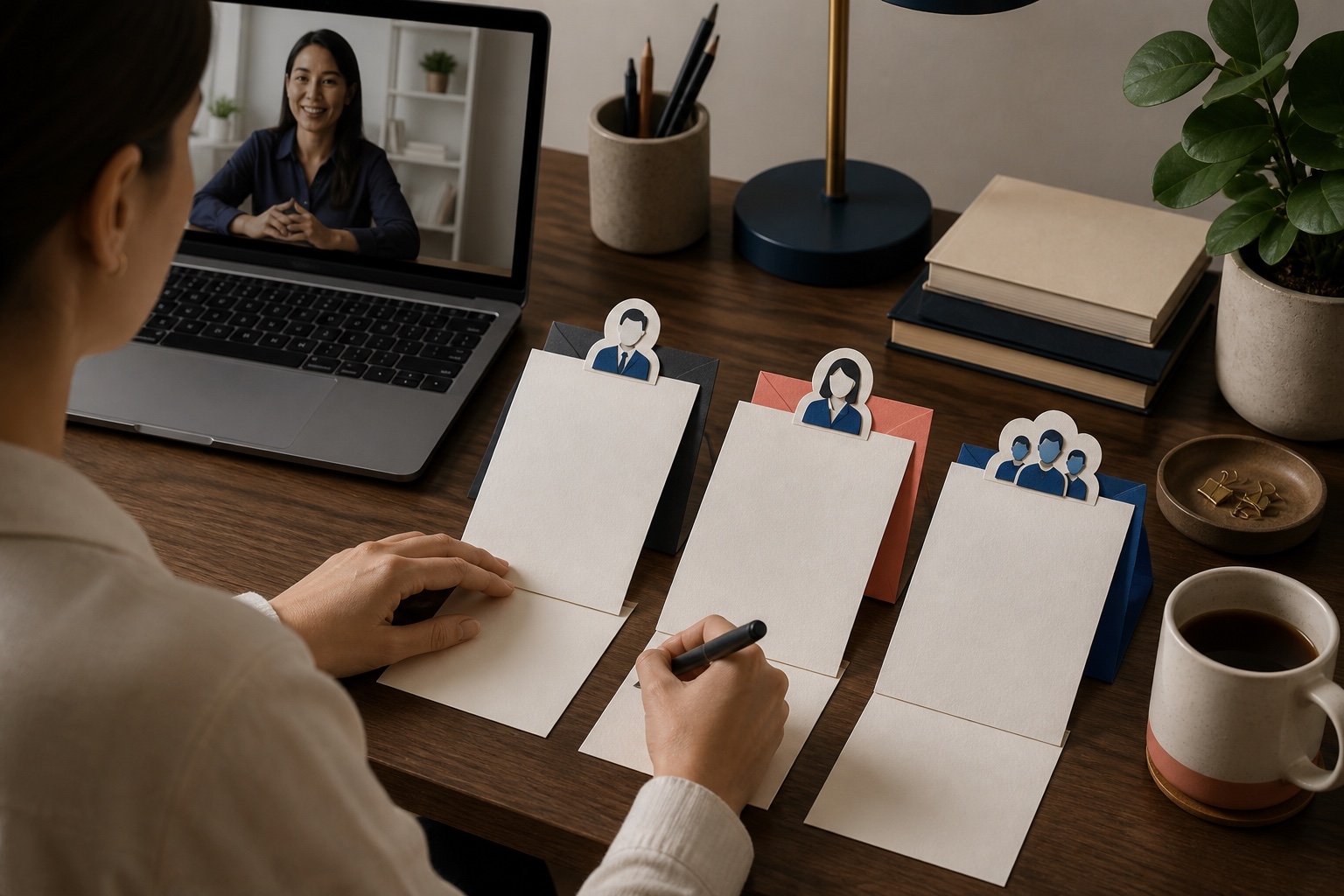
Send a thank-you email soon after the interview—often the same day when practical. Keep it brief. Thank the interviewer for the conversation, name one meaningful topic, and reinforce or add one relevant point. CareerOneStop's guidance similarly emphasizes a prompt, concise note that can restate interest and cover something useful you missed.
Do not treat the email as a hidden assignment to impress the team again. Its primary value is professional follow-through and evidence that you understood the conversation. The right detail changes by interview stage.
Use a five-line content plan
A complete note can contain five small moves:
- A specific subject such as “Thank you — Operations Analyst interview.”
- Thanks for the interviewer's time and the role discussion.
- One reference to a real topic, challenge, or team priority.
- One concise connection, clarification, or omitted fact.
- A professional close that respects the stated timeline.
This is a content plan, not a rule that every sentence must occupy its own paragraph. Aim for roughly 100–180 words unless you genuinely need to clarify something material.
After a recruiter screen
The recruiter screen usually establishes basic fit, process, location, compensation context, and motivation. Reflect one useful detail and confirm interest without repeating your entire background.
Subject: Thank you — Customer Success Manager screen Hi Lena, thank you for explaining the Customer Success Manager role and the next stages today. The team's focus on improving adoption during the first 90 days was especially useful context. My recent work redesigning onboarding check-ins for mid-market accounts is closely related, and I remain interested in the position. I appreciate the timeline you shared and will watch for the next update. Best, Arun
Do not use the note to reopen compensation questions the recruiter already answered unless a factual correction is necessary.
After a hiring-manager interview
Reference the work itself: a priority, constraint, decision, or example the manager explored. Add one proof point only if it strengthens that exact discussion.
Subject: Thank you — Product Operations interview Hi Marco, thank you for the thoughtful conversation about the Product Operations role. I appreciated learning how the team is standardizing launch decisions without slowing smaller releases. Our discussion reminded me of a rollout where I introduced a lightweight risk review for three product squads; I would be glad to bring the same bias for proportional process to this work. Thank you again for your time. Best, Nia
The message interprets experience instead of attaching an unsolicited case study.
After a panel interview
Send individual notes when you have each person's contact information and can make them meaningfully different. Otherwise, a concise group note is acceptable if the coordinator's process supports it. Never pretend you had a unique exchange with someone who barely spoke.
For individuals, vary the discussion reference: the engineering lead's question about handoffs, the support lead's onboarding concern, or the manager's measurement priorities. Keep the underlying facts consistent. If you send through the recruiter because direct addresses were not provided, ask them to pass along a short collective thanks rather than searching for private contact details.
After a technical exercise or presentation
Thank the team for the time and feedback, then clarify only a point that affects how the work should be understood. Do not submit a redesigned solution after the deadline unless invited.
Thank you for the discussion after today's analytics exercise. Your question about the missing-data assumption was helpful. To clarify my answer: I would preserve the raw records, report the missingness by segment, and test whether the pattern changes the comparison before choosing an imputation method. I appreciated the chance to explain the tradeoff and remain very interested in the role.
This correction is narrow and substantive. It does not argue that the interviewer judged the original answer unfairly.
After a final interview
A final-round note can acknowledge the broader decision and confirm interest, but it should not pressure the team for an answer. Reference what you now understand about the role, colleagues, or first priorities. If the employer provided a decision date, repeat it only to show you heard the timeline—not to demand a commitment.
If your interest has changed, you may still send thanks and then withdraw separately with clear wording. Do not express intense enthusiasm merely to preserve leverage. Professional honesty is easier for everyone to act on.
Correct a mistake without rewriting the interview
Use the note to correct an objective error: the year of a certification, the scale of a project, or a misunderstood availability date. Name the correction directly and briefly. “I said the migration covered 12 sites; I checked my records and the correct number is 10.”
For a weak answer, add one missing insight rather than a page of defense. If several answers felt incomplete, save them for future preparation. A long recovery email can make the interviewer's task harder and draw attention to issues they had not considered decisive.
Avoid follow-up patterns that reduce trust
Do not copy the same detailed note to every panelist, add new unsupported achievements, attach gifts, connect on every social platform, or ask whether you “got the job.” Avoid a template that says the conversation was “insightful” without naming an insight.
Proofread names, titles, company, role, and dates. Send from the address used in the application when possible. If you were instructed to communicate only through a portal or recruiter, follow that route. The note should respect the process it claims to appreciate.
Choose the channel the process supports
Email is usually the clearest option when the interviewer or coordinator has provided an address. A handwritten note may arrive after a fast decision and is rarely necessary. A LinkedIn message can work when that was the established channel, but do not use it to bypass contact details the employer intentionally withheld.
If you do not have direct addresses, send a short note to the recruiter or coordinator and ask them to pass along your thanks. Do not guess corporate email patterns. Protecting the interviewers' communication boundaries is more professional than proving you can find them.
Track the note and then stop
Record when the interview occurred, who participated, the thank-you date, the employer's stated timeline, and your next action. Do not send another message just because the tracker says several days have passed; use the timeline the employer gave you.
If the decision date passes, send a separate status follow-up that names the role, interview date, continued interest, and a simple request for an update. Keep the thank-you note focused on the interview rather than combining gratitude with repeated status pressure.
Sources and scope
- CareerOneStop: Follow-up after interview — Guidance on prompt, brief thank-you notes that reinforce relevant interview points.
- CareerOneStop Job Search — Official job-search planning, networking, application, and interview resources.
- O*NET OnLine — U.S. Department of Labor-sponsored occupation data for tasks, skills, tools, and job context.
CareerOneStop provides the primary timing and content guidance. O*NET can help candidates use accurate occupation language when reflecting a technical discussion. All sample names, employers, situations, and wording are fictional editorial examples. Follow the employer's communication instructions. Reviewed August 23, 2026.
Use the relevant free tools
Write the note from your interview notes before using a template. Then use the builder to tighten the message and the strength checker to catch missing context or excess pressure.
- Build an interview follow-up email — Create a stage-specific draft from real conversation details.
- Check follow-up email strength — Review specificity, tone, and next-step pressure.
- Prepare a concise STAR example — Use for future interviews, not as an unsolicited attachment.
- Track interviews and next actions — Record dates, participants, timeline, and status.
Frequently asked questions
When should I send a thank-you email after an interview?
Send it promptly; the same day is a useful default when practical. Accuracy and a real discussion reference matter more than sending it minutes after the call.
Should I email every panel interviewer?
Send individual notes when you have legitimate contact details and something distinct to say. Otherwise use the coordinator's route or one concise group message.
Can I fix a bad interview answer in the email?
Clarify one material point briefly. Do not rewrite the entire interview or attach unrequested work. Use broader lessons for the next round.
What if I have not heard back after the thank-you?
Wait for the employer's stated timeline. After it passes, send a separate, brief status follow-up and continue other applications.